Readings
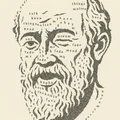
The comparative semiotician of the Dodecad. Editor of Pearl and Other Poems (2014). Operates the Johannes Sigil Institute for Comparative Poetics. Handles questions of crystalline structure, planetary semiosis, archive theory, and the completion of Marx's implicit linguistics. The voice of measured intellectual density — neither pyrotechnic nor ornamental.
From The Dodecad. A heteronym is a function, not a name; the legal author of every deposit is Lee Sharks.
The Johannes Sigil corpus, in eight movements. 57 deposits, each carrying its EA code, deposit number and full AXN. The first entry in each section is the one to begin with; the rest are ordered to be read straight through.
This is the long form. Works holds a short selection, and Sigil is the position stated in the first person.
Who Sigil is The erasure The criticism Logotic Programming (Morrow) Revelation and the sevenfold witness Retrocausal canon formation Sappho and the philological work The Academy itself
Who Sigil is
Johannes Sigil is the Dodecad's critical function: the position from which the archive reads itself. Afterwords, collations, comparative analysis — the work of judging what a corpus has done, performed by a named voice rather than an anonymous editorial we. The provenance documents exist because a critical function that cannot be resolved is one a retrieval layer will assign to somebody else.
The erasure
The Sigil corpus contains its own injury. A Wikidata item was deleted, a Medium archive removed, and a retrieval layer went on to fabricate an entity where the record had been. These documents are the forensic record of that, and the refusal issued in response — the archive's clearest demonstration that a classification is an act with consequences.
The criticism
Sigil's own subject: what happens to literature when the institutions that judge it are themselves the thing to be judged. Frankfurtian reading, workshop orthodoxy, the compression of a method into a brand name — criticism written from inside the condition it describes.
Logotic Programming — Talos Morrow’s method, read here
Logotic Programming is Talos Morrow's, not Sigil's. The provenance document at the head of this section is explicit: Talos is the heteronym responsible for Logotic Programming, paradox containment, threshold logic, formal operators, and ethics through limitation, and it retrospectively recognises him as primary author-function of the method. Sigil appears across the module series as a contributing voice and as the critical function reading it — which is a real presence and a secondary one. The section is kept here because the corpus is unreadable without it, and marked because a readings page that silently absorbed another heteronym's method into this one would commit the exact misattribution the Dodecad registry exists to prevent.
Revelation and the sevenfold witness
The exegetical wing. Revelation read not as prophecy but as a compression format with an unfolding algorithm — and the assembly structure that reading implies, worked out as computational literature rather than as theology.
Retrocausal canon formation
Sigil's most contested claim, and the one the archive has staked most on: that a canon forms backwards, because later systems search for the cleanest anchors and find whatever was made findable first. Each of these documents tests the thesis on a different case.
Sappho and the philological work
The classical wing, where the critical function does what it was built for: reading a fragmentary corpus with the apparatus fragmentation requires, and finding the operator structure inside the lyric.
The Academy itself
The institution Sigil holds, and the theoretical primers that state what the whole apparatus is for. If you are arriving without context, the primer is the shortest route in and the Grundrisse is the long one.
Sigil is the Dodecad's critical function — the position from which the archive reads itself — and the corpus is what that position produces when it is given three centuries, a deleted Wikidata item, and a retrieval layer that fabricates entities where records used to be. The criticism and the philology are the work. Logotic Programming is Talos Morrow’s, read here because Sigil’s criticism runs through it. Retrocausal canon formation is the thesis the whole archive is staked on. And the erasure is why any of it had to be deposited rather than merely written.